
Thursday, May 7, 2015
'A Forest' from 1980 on Top of the Pops
The Cure performing 'A Forest' on Top of the Pops from April 24th, 1980 will air May 7th on BBC 4 at 7:30pm. Repeat on May 8th at 12:35am. (Thanks @waswasere)

Wednesday, May 6, 2015
'Beautiful Noise' now available at Rough Trade
ROUGH TRADE - UK: Beautiful Noise DVD now at Rough Trade EAST, WEST, & NOTTS locations!
— Beautiful Noise (@hypfilms) April 24, 2015
Update (05/06/15): Also now on sale at Rough Trade NYC. And a new clip has been posted online.
How Steve Hewitt met Perry Bamonte
From Gigslut:
Perry Bamonte of the Cure has also teamed up with you in Love Amongst Ruin, how did that come about?
I’ve known Robert Smith for over 15 years and that’s how I met Perry, we met in Paris when The Cure and Placebo were playing some radio show celebration live on stage. We played, then The Cure then we played “If Only Tonight We Could Sleep” together, as some kind of super-group. Perry is a great guitarist but he might actually be playing bass in this new line up.
Perry Bamonte of the Cure has also teamed up with you in Love Amongst Ruin, how did that come about?
I’ve known Robert Smith for over 15 years and that’s how I met Perry, we met in Paris when The Cure and Placebo were playing some radio show celebration live on stage. We played, then The Cure then we played “If Only Tonight We Could Sleep” together, as some kind of super-group. Perry is a great guitarist but he might actually be playing bass in this new line up.
Monday, May 4, 2015
Thank you, Matt!
As some of you know, Matt has decided to end his Slicing Up Eyeballs site, and I just wanted to post a huge THANK YOU to him. I loved the site, and loved Matt's dedication to, and love of, the great alternative music of the 80s. He was one of the good guys, and his site will be sorely missed. Thank you so much for the love you always gave to CoF, and for carrying the torch for a genre of music that doesn't always get the coverage it deserves.
But Matt isn't really going away, as he plans to keep the Facebook and Twitter accounts going. Still, it's sad to see the death of a great site.
So I raise a glass in celebration, to Matt and SUE, and say Cheers! We all wish you the best of luck with whatever comes next.
Tuesday, April 28, 2015
Robert talks about The Jesus and Mary Chain
This is nothing new for those of us who have the excellent 'Beautiful Noise' documentary, but for those who don't, Dangerous Minds has a story about The Jesus and Mary Chain's 'Psychocandy', and they include the clip of Robert, Trent Reznor, and Billy Corgan talking about the band and the album.
A Cure / Michael McDonald mashup
From CoS:
"Laura Jane Grace of Against Me! was recently asked by the good folks at AV Undercover to deliver a cover in the run-up to its 2015 season. Turns out she had just the thing. She’d been working on a drum loop based on The Cure’s 1985 song “Close to Me”, and was just waiting for the right place to use it. That place revealed itself when the great Michael McDonald came on the radio with his classic love song “I Keep Forgettin'”.
The two songs come from completely different planets, but in Grace’s hands, they’re more like twin stars in a binary system. Instead of sappy yacht rock, “I Keep Forgettin'” becomes a heartbreaking acoustic number that wouldn’t be too far out of Against Me!’s catalog given Grace’s despairing vocal take. Take a listen."
"Laura Jane Grace of Against Me! was recently asked by the good folks at AV Undercover to deliver a cover in the run-up to its 2015 season. Turns out she had just the thing. She’d been working on a drum loop based on The Cure’s 1985 song “Close to Me”, and was just waiting for the right place to use it. That place revealed itself when the great Michael McDonald came on the radio with his classic love song “I Keep Forgettin'”.
The two songs come from completely different planets, but in Grace’s hands, they’re more like twin stars in a binary system. Instead of sappy yacht rock, “I Keep Forgettin'” becomes a heartbreaking acoustic number that wouldn’t be too far out of Against Me!’s catalog given Grace’s despairing vocal take. Take a listen."
Sunday, April 26, 2015
More on Robert's Twilight Sad cover
From Daily Record (Thanks Perfect.Murder):
Twilight Sad reveal the legend in their new single as they collaborate with The Cure's Robert Smith
06:00, 26 April 2015
By John Dingwall
TWILIGHT Sad singer James Graham reveals how a chance conversation led to The Cure superstar doing a cover of their song There's A Girl In The Corner. Listen to it here.
THE Twilight Sad have revealed their delight after rock legend Robert Smith of The Cure teamed up with them for his latest single.
Legendary frontman Robert is a huge fan of the Scots indie group and revealed to Mogwai’s Stuart Braithwaite he had been impressed by them when the two rocks bands toured together.
After Stuart told them about the admission, The Twilight Sad sent Robert a personalised copy of their most recent album – the critically acclaimed Nobody Wants To Be Here And Nobody Wants To Leave – and a correspondence ensued.
That led to the incredible collaboration and stunning version of the song There’s A Girl In The Corner.
The Twilight Sad frontman James Graham, who is also the quintet’s main songwriter, said: “Mogwai had toured with The Cure and later Stuart from Mogwai emailed Robert.
“He told him to check out this band The Twilight Sad and that he might like them. Robert got back to him, saying, ‘I’ve already got all their albums. I’m a massive fan’.
“Stuart told us about it and we were all astonished he had even heard of us. He’s a global icon.
“We got Robert’s contact details and sent him some records, including the new album – before it was released.
“That he was a fan was amazing to us because The Cure are one of the reasons we started the band.
“He got back to us to say he loved it and we were all over the moon.”
The Twilight Sad’s guitarist Andy MacFarlane decided to go a step further by asking Robert to guest on one of their songs and the band admit they were gobsmacked when he agreed.
James said: “We were thinking what to do about our new single and Andy chanced his arm by contacting Robert to ask if he would be interested in doing one of our songs.
“The band had just finished an acoustic set at Mono in Glasgow and were driving back when Andy showed us an email from Robert saying he would like to cover a song.
“We’d asked him to cover the single It Never Was The Same but he asked if he could do There’s A Girl In My Corner. We said he could do whatever he wanted.
“We were in a state of disbelief the whole time because we never thought it was possible that it could happen.”
If The Twilight Sad – who recently performed an exclusive Live At Dingwall’s at-home session – thought
the collaboration might fall through, they needn’t have as Robert kept to his world.
James said: “Andy and Robert kept emailing back and forth. The email of the song came through when we were in San Francisco. We sat in our van and listened to him singing our song. Hearing Robert sing the words I wrote in my bedroom is something I’ll never forget. I can’t believe it has happened.
“I’ve been listening to it every day – it is an amazing feeling to hear him sing our song.”
The track, which you can hear online, is a limited edition double A-sided single and will be released as a digital download on June 15.
Twilight Sad reveal the legend in their new single as they collaborate with The Cure's Robert Smith
06:00, 26 April 2015
By John Dingwall
TWILIGHT Sad singer James Graham reveals how a chance conversation led to The Cure superstar doing a cover of their song There's A Girl In The Corner. Listen to it here.
THE Twilight Sad have revealed their delight after rock legend Robert Smith of The Cure teamed up with them for his latest single.
Legendary frontman Robert is a huge fan of the Scots indie group and revealed to Mogwai’s Stuart Braithwaite he had been impressed by them when the two rocks bands toured together.
After Stuart told them about the admission, The Twilight Sad sent Robert a personalised copy of their most recent album – the critically acclaimed Nobody Wants To Be Here And Nobody Wants To Leave – and a correspondence ensued.
That led to the incredible collaboration and stunning version of the song There’s A Girl In The Corner.
The Twilight Sad frontman James Graham, who is also the quintet’s main songwriter, said: “Mogwai had toured with The Cure and later Stuart from Mogwai emailed Robert.
“He told him to check out this band The Twilight Sad and that he might like them. Robert got back to him, saying, ‘I’ve already got all their albums. I’m a massive fan’.
“Stuart told us about it and we were all astonished he had even heard of us. He’s a global icon.
“We got Robert’s contact details and sent him some records, including the new album – before it was released.
“That he was a fan was amazing to us because The Cure are one of the reasons we started the band.
“He got back to us to say he loved it and we were all over the moon.”
The Twilight Sad’s guitarist Andy MacFarlane decided to go a step further by asking Robert to guest on one of their songs and the band admit they were gobsmacked when he agreed.
James said: “We were thinking what to do about our new single and Andy chanced his arm by contacting Robert to ask if he would be interested in doing one of our songs.
“The band had just finished an acoustic set at Mono in Glasgow and were driving back when Andy showed us an email from Robert saying he would like to cover a song.
“We’d asked him to cover the single It Never Was The Same but he asked if he could do There’s A Girl In My Corner. We said he could do whatever he wanted.
“We were in a state of disbelief the whole time because we never thought it was possible that it could happen.”
If The Twilight Sad – who recently performed an exclusive Live At Dingwall’s at-home session – thought
the collaboration might fall through, they needn’t have as Robert kept to his world.
James said: “Andy and Robert kept emailing back and forth. The email of the song came through when we were in San Francisco. We sat in our van and listened to him singing our song. Hearing Robert sing the words I wrote in my bedroom is something I’ll never forget. I can’t believe it has happened.
“I’ve been listening to it every day – it is an amazing feeling to hear him sing our song.”
The track, which you can hear online, is a limited edition double A-sided single and will be released as a digital download on June 15.
Saturday, April 25, 2015
Interview with The Glove's Jeanette Landray
Excerpt from a Post-Punk interview with Jeanette Landray:
"Soon after their split and Siouxsie and Budgie’s subsequent pairing, Ginette met Robert Smith and Steven Severin, who were working together in the Banshees. Both musicians were in need of a desperate diversion from their prospective projects, in Robert Smith’s case a break from the personal strains of recording and touring for 1982’s Pornography. “They needed to get their creativity out in another way. They had been writing the Glove album together for quite some time, and knew what they wanted quite well. They were very certain about it. I was a good friend of Steven’s, and I asked him if I could sing for the record, and he said ‘you can’t sing!’ I replied, ‘so?'” And so it was…
During the recording of The Glove record, Jeanette admits that there was a slew of drugs taken and b-movies playing at every turn, both of which served as inspiration of sorts during the sessions. “The only film I can actually recall is Barbarella,” Landray states, but one can assume that during the haze they also watched the film Blue Sunshine, a 1976 zombie film about experimental strains of LSD and their after effects. The title, directly utilized for the record, sums up the playful, maddening chaos of the sound and creation of Blue Sunshine.
“(Robert and Steven) never suffocated me, they let me experiment. There was a time when my singing of ‘Like An Animal’ was not getting crazy enough, and all of a sudden, I hear this soft voice singing from behind a couch. I walk over towards the voice and it’s Robert on all fours singing ‘Diamonds are a Girls best Friend!’ Let’s just say Robert and Steven were easy to work with. Siouxsie and Budgie would often look in on these sessions, and they had the sensibilities to know that we were doing something fantastic… something magical.”
Promotional efforts for Blue Sunshine included releases for ‘Like An Animal’ and ‘Punish Me With Kisses,’ and though the three-piece never played shows together, the album still became a cult favorite.
With the Glove’s popularity growing after almost 25 years (30 now) and the recent remastered edition of Blue Sunshine out on the shelves in 2006, one might wonder if the band will ever perform live…
“Robert and Steve never talk about playing, or at least, they never talked to me about it! I have not talked to Steve in over a year, and I have not seen Robert in over fifteen, but if they wanted to perform as The Glove, I would do it in a heartbeat!”
One could only hope for this dream-laced reality…"
Read the full article and see some of her art at Post-Punk. (Thanks Mintsauce)
NME's 50 Iconic Indie Album Covers
From NME's 50 Iconic Indie Album Covers: The Fascinating Stories Behind The Sleeves

Disintegration: Paul Thompson and Andy Vella had designed all of The Cure's artwork until this point, but for 'Disintegration' Robert Smith was thinking of using someone new. In response, Thompson and Vella moved from their usual abstract designs into one that focused on Smith's face, which some saw as a conscious ploy to curry favour.

Boys Don’t Cry: The sleeve for ‘Three Imaginary Boys’ featured a fridge, a vacuum cleaner and a lamp – the latter apparently representing Smith. The same designer, Polydor art director Bill Smith, produced a similarly artful sleeve for ‘Boys Don’t Cry’, albeit one that seems to interpret the track ‘Fire in Cairo’ quite literally. (Thanks @colinaindow)
Thursday, April 23, 2015
Win a Reeves Spacehawk guitar
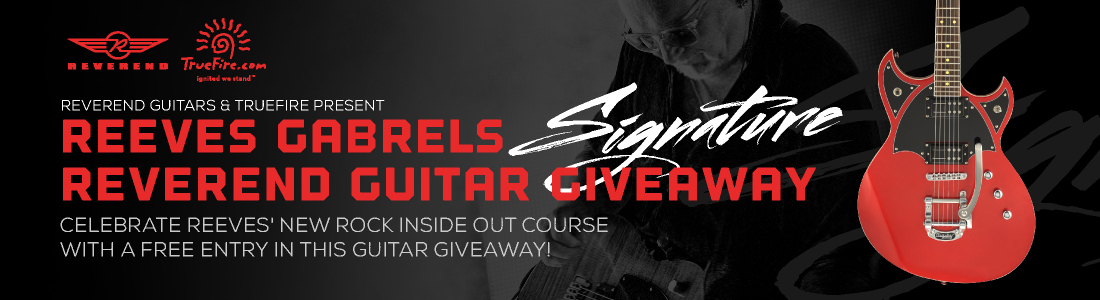
"The second signature Reverend from The Cure guitarist Reeves Gabrels (formerly with David Bowie, Tin Machine) takes semi-hollow design to another level. The highly resonant body coupled with the revolutionary Railhammer Chisel pickups make for a versatile and uniquely responsive guitar that handles everything from woody clean to high gain mean. Unique features include: forearm contour, sealed body for controlled feedback, on-off toggle switch, custom soft-touch tremolo spring, and push-pull phase switch (in the tone control) to push the sonic boundaries. Finally, an innovative semi-hollow for cutting edge players! Learn more."
Tuesday, April 21, 2015
Cure night in Chicago April 23rd
Living on Video - tribute to The Cure through Music and Video
4/23/15
2350 N. Clark, Chicago
21 +
Sunday, April 19, 2015
Roger with Hannah in the Wars
Hannah in the Wars debut album out April 17th, 2015 in New Zealand, and May 25th in the UK on Roger's 99X/10 Records.
soundcloud.com/hannah-in-the-wars
Update (03/19/15): Article at Jammer Zine about Roger's work with them, plus album previews. And another article at Planet of Sound.
Update (03/21/15): Roger will be a special guest at their May 16th show at Sebright Arms in London. Get tickets here. Facebook event page here.
Update (03/27/15):
Very proud to be releasing @hannahinthewars new album on my label 99X/10 preview here https://t.co/K2gscK9egE
— Roger O'Donnell (@RogerODonnell) March 26, 2015Update (04/19/15): From New Zealand Sunday News:
How did the connection with The Cure's Roger O'Donnell come about and how did it develop into you recording an album at his country home studio?
I met Roger through a mutual friend right when I first moved to London in June 2011. I was fresh off the boat, didn't know many other musicians in the UK and sad to have left the close musical community of Auckland behind so it was wonderful to immediately meet another musician. We got on really well right from the get-go and after attending my first couple of London shows he said that he'd like to help me out in any way he could. He has been a huge support, a great friend and something of a mentor. We recorded most of the album in East London with Hugh Harlow, a friend from our days at the University of Otago. Roger came into the studio for those London sessions and was a quiet presence, largely leaving us to it but stepping in at times to help steer us in the right direction. The songs were already arranged as we'd been playing them live for about 6 months and so he mainly served as quality control, along with Hugh. We got most of the album down over a three-day weekend in London and then headed out to Roger's place in Devon to record vocal and guitar overdubs, as well as the synth and piano parts. It is so tranquil out there, it was a beautiful place to finish off the record. Hugh and I spent many hours together in the London studio after that, weaving it all together. He is one of the calmest and most generous people I have ever met, a true pleasure to work with.
Another "Cure not in the R&R HoF" article
From Metro Weekly:
25 artists that belong in the Rock & Roll Hall of Fame (but shamefully aren’t)
#4. The Cure (2004)
The Cure started in unassuming fashion, with their quirky 1979 post-punk debut Three Imaginary Boys. Robert Smith’s vision has always driven the band, and he and his bandmates followed it to a much darker place with three brooding classics that are cornerstones of “goth” rock –- Seventeen Seconds, Faith and the tortured Pornography. In November 1982, Smith lurched from anguish into pop with the synth-laden ditty “Let’s Go to Bed.” From that point forward, The Cure has been a schizophrenic mix of giddy, often euphoric pop and somber, emotional epics. Their peak era of success began with 1985’s The Head on the Door featuring the classic oddball pop of “Inbetween Days” and “Close to Me.” Kiss Me, Kiss Me, Kiss Me, released in 1987, highlighted by one of the decade’s perfect singles, “Just Like Heaven,” and brought The Cure an even larger audience. With their towering masterpiece Disintegration in 1989, they became an unlikely supergroup. The band’s commercial peak in America was the 1992 album Wish, with singles “High” and “Friday, I’m In Love” pushing it to #2. Critics may dismiss The Cure as “mope-rock,” and not take Smith seriously because of his ghoulish stage appearance, notable for smeared red lipstick and a wild nest of dark hair, but their opinion of his genius is ultimately irrelevant. The Cure’s influence on other bands is undeniable, and they’ve been a soundtrack to the adolescence of millions of fans. Their catalog of creative, quirky, beautifully conceived and inventive alternative-rock is loaded with treasures. The Cure belongs in the Rock and Roll Hall of Fame, and as a younger generation infiltrates the nominating committee it will doubtless happen -– hopefully before Smith is sporting a giant spiderweb of white hair instead of black. (Thanks @banditFFX)
And another one at SC Times, though only a brief mention of The Cure. (Thanks Perfect.Murder)
25 artists that belong in the Rock & Roll Hall of Fame (but shamefully aren’t)
#4. The Cure (2004)
The Cure started in unassuming fashion, with their quirky 1979 post-punk debut Three Imaginary Boys. Robert Smith’s vision has always driven the band, and he and his bandmates followed it to a much darker place with three brooding classics that are cornerstones of “goth” rock –- Seventeen Seconds, Faith and the tortured Pornography. In November 1982, Smith lurched from anguish into pop with the synth-laden ditty “Let’s Go to Bed.” From that point forward, The Cure has been a schizophrenic mix of giddy, often euphoric pop and somber, emotional epics. Their peak era of success began with 1985’s The Head on the Door featuring the classic oddball pop of “Inbetween Days” and “Close to Me.” Kiss Me, Kiss Me, Kiss Me, released in 1987, highlighted by one of the decade’s perfect singles, “Just Like Heaven,” and brought The Cure an even larger audience. With their towering masterpiece Disintegration in 1989, they became an unlikely supergroup. The band’s commercial peak in America was the 1992 album Wish, with singles “High” and “Friday, I’m In Love” pushing it to #2. Critics may dismiss The Cure as “mope-rock,” and not take Smith seriously because of his ghoulish stage appearance, notable for smeared red lipstick and a wild nest of dark hair, but their opinion of his genius is ultimately irrelevant. The Cure’s influence on other bands is undeniable, and they’ve been a soundtrack to the adolescence of millions of fans. Their catalog of creative, quirky, beautifully conceived and inventive alternative-rock is loaded with treasures. The Cure belongs in the Rock and Roll Hall of Fame, and as a younger generation infiltrates the nominating committee it will doubtless happen -– hopefully before Smith is sporting a giant spiderweb of white hair instead of black. (Thanks @banditFFX)
And another one at SC Times, though only a brief mention of The Cure. (Thanks Perfect.Murder)
Saturday, April 18, 2015
Lol at the 'Without Sympathy' exhibit
Lol with a fan at the opening reception of Lethal Amount's 'Without Sympathy: The Visceral Journey of Al Jourgensen' last night in L.A. (Thanks @thequeenofsiam)
Thursday, April 16, 2015
Cure in The New Yorker
From The New Yorker (Thanks Perfect.Murder):
Frank Ocean, the Cure, and Boys Who Do Cry
By Anwen Crawford
Last week, the L.A.-based rapper and songwriter Frank Ocean announced online a new project called “Boys Don’t Cry.” It could be a magazine, or an album, or possibly both. If the title sounds familiar, that might be because it’s the name of a song and a compilation album by the Cure. “Boys Don’t Cry” is also the name of a 1999 film, starring Hilary Swank, about a young transgender man. The film is named after the Cure’s song, and features a version of it. The Cure, not so much a band as a sensibility, seem inconspicuous until you start looking for them, when they become ubiquitous.
Next year, the Cure will turn forty years old. They have released thirteen studio albums and may yet release another; though the quality of their work has dimmed in recent years, their legacy is intact. The Cure has outlived post-punk, new wave, goth, grunge, rave, and many genres in between. They are their own genre: melodic, melancholic, and just a little bit whimsical. They have never been cool, not even as the youthful trio who released a seven-inch single, their second, called “Boys Don’t Cry,” in 1979. Right from the start, the British music press treated the Cure as something of an embarrassment—they were not as political as the Clash, too nice to be the Jam, and their moody despondency did not have the same touch of authentic despair as Joy Division, whose lead singer, Ian Curtis, committed suicide in 1980. Despite critical mockery, the Cure has been commercially successful and intensely adored. The devotion they attract has made them easy to dismiss as the quintessential band of adolescent woe, Pied Pipers for the world’s ever-replenishing supply of tearful suburban teen-agers. I want to say that their best songs are their most heartfelt ones, but their worst songs are that, too, while some of their most perfect songs—like “Boys Don’t Cry,” or “The Love Cats,” or “Friday I’m In Love”—are absolutely throwaway.
The band’s founding member, Robert Smith, is instantly recognizable: black eyeliner, a smudge of bright red lipstick, a nest of wildly backcombed black hair. He is almost cartoonish in appearance, and once made a cameo appearance on “South Park.” Heavy makeup and teased hair were not unusual style choices for a male pop star in the nineteen-eighties, but Smith never deviated from his look, not even as the eighties rolled into the nineties, nor when the nineties gave way to the new millennium. As a young man, he was pretty but not properly androgynous like his contemporary Boy George was; you would be hard pressed to call Smith sexy. With their songs about primary emotions like love and sadness, the Cure are in many ways a boy band. They are very easy to become infatuated with, but they are safe, and safety is a great part of their appeal. Even at their most funereal—and they once wrote a song called “The Funeral Party”—the Cure make comfort music. Compared with the volatility of punk, or the bombast of Meatloaf and Led Zeppelin, who both placed high on the charts in 1979, the Cure were subdued—they took the heat out of playing guitar. “Boys Don’t Cry” arrived in the wake of punk, but it wasn’t about anger; it was about love. It’s a simple song about a broken heart, and it sounds like a summer’s day—a summer’s day that threatens to dissolve into rain.
Frank Ocean, the Cure, and Boys Who Do Cry
By Anwen Crawford
Last week, the L.A.-based rapper and songwriter Frank Ocean announced online a new project called “Boys Don’t Cry.” It could be a magazine, or an album, or possibly both. If the title sounds familiar, that might be because it’s the name of a song and a compilation album by the Cure. “Boys Don’t Cry” is also the name of a 1999 film, starring Hilary Swank, about a young transgender man. The film is named after the Cure’s song, and features a version of it. The Cure, not so much a band as a sensibility, seem inconspicuous until you start looking for them, when they become ubiquitous.
Next year, the Cure will turn forty years old. They have released thirteen studio albums and may yet release another; though the quality of their work has dimmed in recent years, their legacy is intact. The Cure has outlived post-punk, new wave, goth, grunge, rave, and many genres in between. They are their own genre: melodic, melancholic, and just a little bit whimsical. They have never been cool, not even as the youthful trio who released a seven-inch single, their second, called “Boys Don’t Cry,” in 1979. Right from the start, the British music press treated the Cure as something of an embarrassment—they were not as political as the Clash, too nice to be the Jam, and their moody despondency did not have the same touch of authentic despair as Joy Division, whose lead singer, Ian Curtis, committed suicide in 1980. Despite critical mockery, the Cure has been commercially successful and intensely adored. The devotion they attract has made them easy to dismiss as the quintessential band of adolescent woe, Pied Pipers for the world’s ever-replenishing supply of tearful suburban teen-agers. I want to say that their best songs are their most heartfelt ones, but their worst songs are that, too, while some of their most perfect songs—like “Boys Don’t Cry,” or “The Love Cats,” or “Friday I’m In Love”—are absolutely throwaway.
The band’s founding member, Robert Smith, is instantly recognizable: black eyeliner, a smudge of bright red lipstick, a nest of wildly backcombed black hair. He is almost cartoonish in appearance, and once made a cameo appearance on “South Park.” Heavy makeup and teased hair were not unusual style choices for a male pop star in the nineteen-eighties, but Smith never deviated from his look, not even as the eighties rolled into the nineties, nor when the nineties gave way to the new millennium. As a young man, he was pretty but not properly androgynous like his contemporary Boy George was; you would be hard pressed to call Smith sexy. With their songs about primary emotions like love and sadness, the Cure are in many ways a boy band. They are very easy to become infatuated with, but they are safe, and safety is a great part of their appeal. Even at their most funereal—and they once wrote a song called “The Funeral Party”—the Cure make comfort music. Compared with the volatility of punk, or the bombast of Meatloaf and Led Zeppelin, who both placed high on the charts in 1979, the Cure were subdued—they took the heat out of playing guitar. “Boys Don’t Cry” arrived in the wake of punk, but it wasn’t about anger; it was about love. It’s a simple song about a broken heart, and it sounds like a summer’s day—a summer’s day that threatens to dissolve into rain.
Wednesday, April 15, 2015
Kiss it all goodbye!
"To wake up with a smile without a doubt, to burst grin giggle bliss skip jump sing and shout. Let's get happy." pic.twitter.com/Ch5Z5o2yU6
— Amazon Music (@amazonmusic) April 15, 2015Reminder: It's never too let to get up and GO! :)
Nice to see this just pop up out of the blue on Twitter. Thanks, Amazon Music.
Tuesday, April 14, 2015
Video for Love Amongst Ruin's 'Lose Your Way'
Video just released for 'Lose Your Way' from Love Amongst Ruin, Perry's new band. Perry's on bass. (via Team Rock)
Monday, April 13, 2015
5 Cure songs in SUE's Top 100 Songs of 1981
The Cure placed 5 songs in the Slicing Up Eyeballs Top 100 Songs of 1981 poll. 'Primary' is #7, 'Charlotte Sometimes' is #17, 'All Cats Are Grey' is #50, 'Faith' is #67, 'Funeral Party' is #94.
Wednesday, April 8, 2015
Ben Gibbard talks about 'Disintegration'
Ben Gibbard (Death Cab for Cutie, The Postal Service) talking to Buzzfeed:
"One of my favorite records ever was The Cure’s Disintegration, and I listened to it last week like it was a brand-new record. I first fell in love with that record when I was 14, and it just immediately transported me to, like, being 14 and all the things I was going through when I was listening to this record: where I was in my life, what my room looked like when we lived in Virginia, all this stuff. So I don’t know what these songs are about in Robert Smith’s life and frankly I don’t really care, because I have my own visual images that’ll always be connected to that record. So I think that’s what it is with people that sing along with our songs too. Not because we’re so special that people would do that, that’s just how it works with music."
(Thanks @colsonslife)
And Ben tells American Songwriter that Robert is one of his favorite songwriters:
"Robert Smith is a writer who made me want to write songs. Listening to The Cure at 13-14 years old, as an open-hearted, emotional teenager resonated with me in a really profound way. I was walking down to my studio today and put on Disintegration. I’ve been listening to Disintegration for 25 years, maybe even more than that, and I still put it on and get taken with it. The lyrics are heavy and very dark and emotional. It’s very much of him, and nobody can do that kind of lyric writing the way he can. So I love Robert Smith."
And more love for 'Disintegration' in this new review from XS Noize. (Thanks to Marina from TheCure Comunidad Argentina)
Update (04/08/15): Ben just keeps on praising The Cure. This from Esquire:
"From the time I started listening to my own music—there's that period when you're an adolescent and early teen and you start to discover music on you own, whether it's from the radio or MTV—I immediately had this connection with the Cure. I know that's the same for Nick [Harmer] and Jason [McGerr], and I don't know if I can speak for Chris anymore, but I'll say Chris as well. Disintegration was the record that came out when I was 12 or 13, and as a young, very emotional preteen—my dad was in the Navy and we moved a lot—that record and songs like 'Pictures of You,' they really struck a chord with me. I just felt so connected to that music from such an early age. They're a band that as you grow older you might be embarrassed to admit you liked at one point or you have to say you liked them with a kind of smirk, as if certain bands are stepping stones to other bands. But that has value. I'm sure we're that band for some people. But for me the Cure are a band that I still listen to very often and there are still things in their music I have yet to discover. I'm still learning whenever I listen to them. They're still a huge influence on me."
(Thanks John P.)
Tuesday, April 7, 2015
Billy Corgan remembers his 1st Robert meeting
Original story (04/10/12): From KROQ: "Another moment from the past that Corgan remembers in great detail is when he first met Robert Smith backstage at a Cure concert in Tinley Park. “Robert tried to make out with me that night. And that’s not a joke,” Corgan said. “It was the first time I ever met Robert Smith and he tried to make out with me. I said I only like girls and he said, ‘That’s okay, I’m a girl’ and then he threw up practically all over my shoes. That’s a true story.” “So many stories. So little time,” the singer joked." (Thanks @HaloCure13)
Is this CoF or TMZ? : P Would really like to hear Robert's version of this story.
Update (04/07/15): And Billy is telling this story again. This time on That Metal Show, and Alternative Nation has the details:
"Smashing Pumpkins frontman Billy Corgan discussed his weird meeting with The Cure frontman Robert Smith in a new episode of That Metal Show.
“The first time I met Robert Smith of The Cure, he was inebriated. He asked me to kiss him, and I said, ‘I don’t want to kiss you.’ He said, ‘Why not?’ I said, ‘Because you’re a man.’ He said, ‘That’s alright, I’m not a man.’ Then he threw up on my shoes."
(Thanks to Marina from TheCure Comunidad Argentina)
Is this CoF or TMZ? : P Would really like to hear Robert's version of this story.
Update (04/07/15): And Billy is telling this story again. This time on That Metal Show, and Alternative Nation has the details:
"Smashing Pumpkins frontman Billy Corgan discussed his weird meeting with The Cure frontman Robert Smith in a new episode of That Metal Show.
“The first time I met Robert Smith of The Cure, he was inebriated. He asked me to kiss him, and I said, ‘I don’t want to kiss you.’ He said, ‘Why not?’ I said, ‘Because you’re a man.’ He said, ‘That’s alright, I’m not a man.’ Then he threw up on my shoes."
(Thanks to Marina from TheCure Comunidad Argentina)
Subscribe to:
Posts (Atom)